
 1,950 m
Malla Manila
The upper shrine, resting high on the hill at around 1,950 metres, rewards the climb with sweeping views of the Himalayan range.
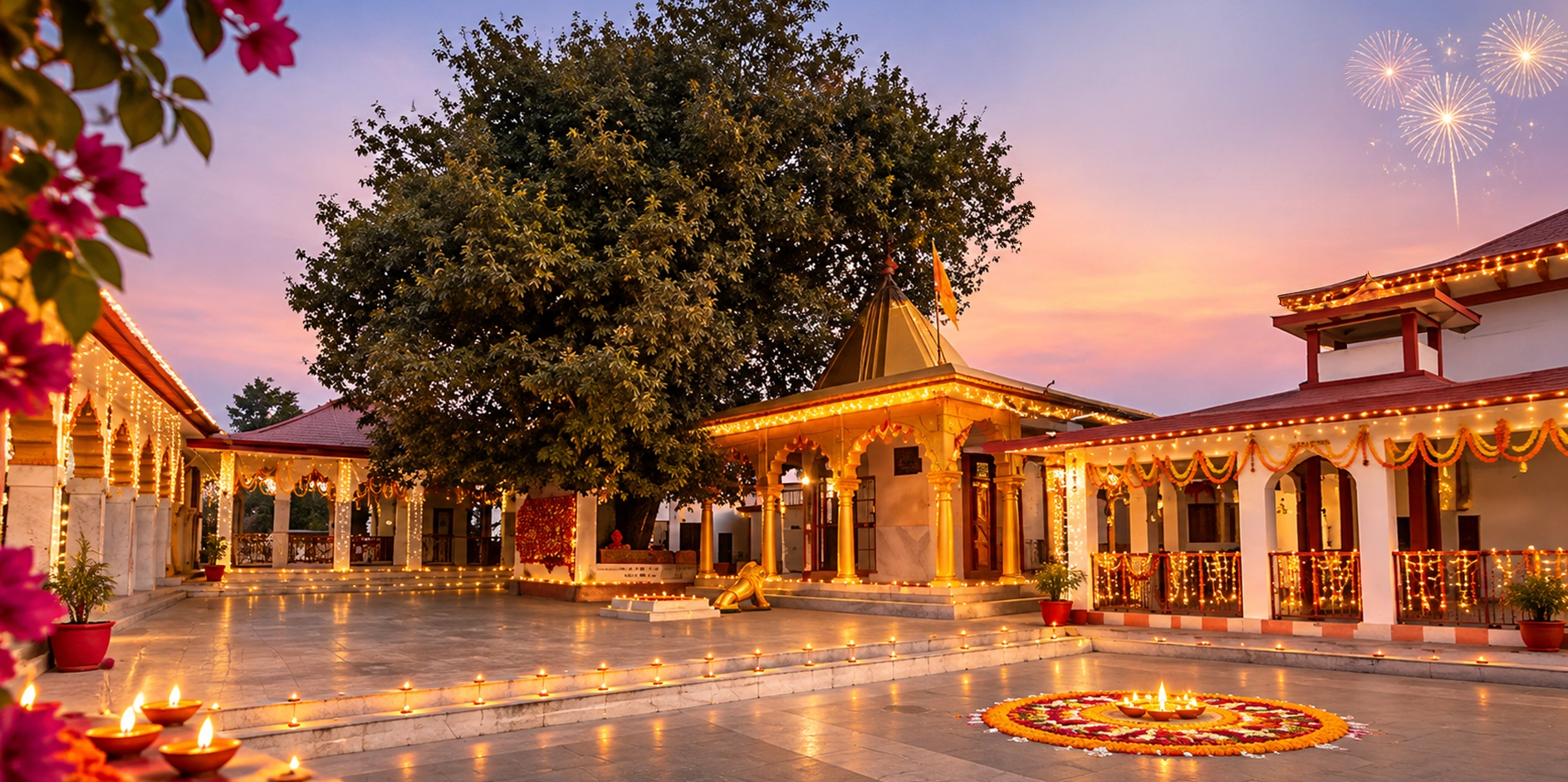
The story of an ancient Shakti Peeth and the family goddess of the Katyuri kings.
Maa Manila Devi Temple is a revered Shakti Peeth set amid the deodar forests and terraced hills of Manila village in the Almora district of Uttarakhand. Perched at roughly 1,800 metres above sea level, the shrine looks out upon the snow peaks of Trishul, Nanda Devi and Panchachuli, and is counted among the most sacred goddess temples of the Kumaon region.
The goddess is worshipped as Chandika, the Kul Devi (family deity) of the Katyuri dynasty that once ruled large parts of the Uttarakhand hills. Within the sanctum are two sacred idols - one revered as Saraswati and the other as Bhavani. It is from the goddess that the surrounding region takes its name - Manila.
Devotees hold that Maa Manila fulfils the heartfelt wishes of those who come to her with faith, and shields her devotees from misfortune. Through the year, and especially during Navratri, pilgrims climb to the temple to offer prayers and seek her blessings.
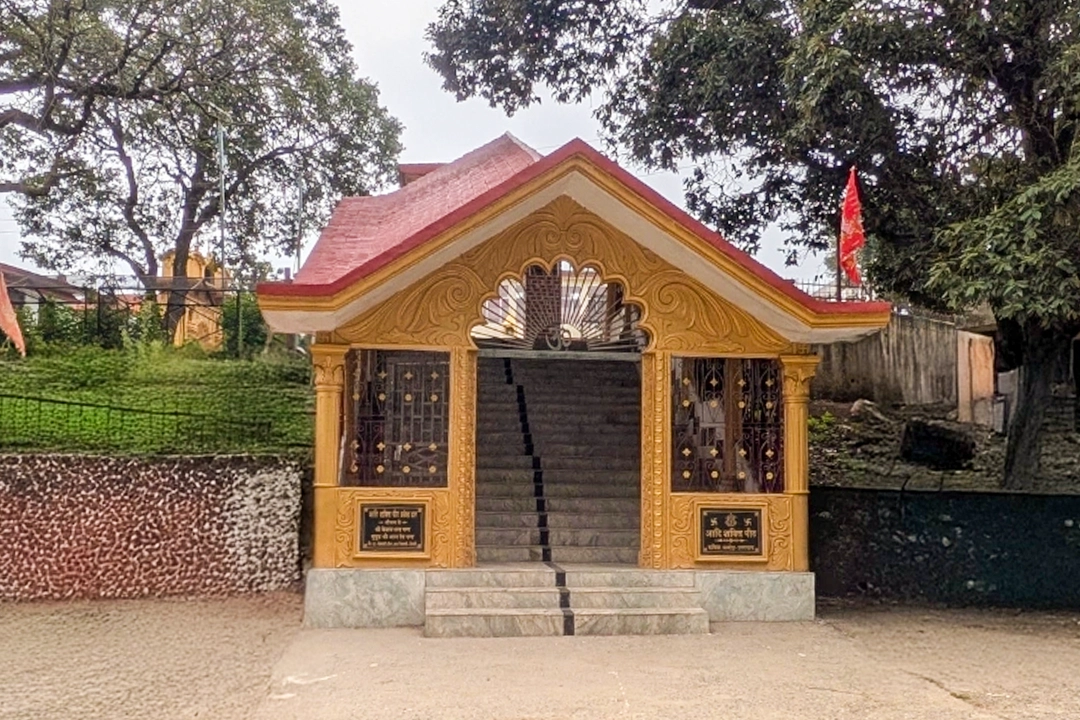




The temple complex is spread across two shrines set at different heights on the hillside. Devotees traditionally pay their respects at both.
1,950 m
The upper shrine, resting high on the hill at around 1,950 metres, rewards the climb with sweeping views of the Himalayan range.
 1,500 m
The lower shrine, at about 1,500 metres, sits amid dense forest and is the first darshan for most pilgrims arriving at Manila.
A much-loved local legend tells of thieves who once tried to carry away the idol of Maa Manila Devi. However hard they tried, they could not move the sacred image from its place. In their struggle one hand of the idol was broken, yet even then it could not be taken far - the goddess would not leave her chosen abode.
To this day the tale is retold as proof of the living power of the shrine, and the idol remains at Manila as a symbol of the goddess’s abiding presence and protection.
Around the 14th century the Katyuri kingdom moved its capital from Lakhanpur to Manila, where the dynasty enshrined its family goddess, Chandika - the origin of this sacred shrine.
A treaty between the Katyuri king Viramdev and the Chand king Kirtichand made the Ramganga river their boundary - and Manila Devi stood a witness to the Katyuri, Chand, Gorkha and British eras alike.
The grand domed temple, damaged over time by natural calamities, was rebuilt by local devotees. The British land settlement of 1872 recorded its earlier form, of which two small shrines still survive.
The Manila Temple Management Committee, formed in 2009, began a full restoration with the support of local people, migrants and generous donors - shaping the temple seen today.
Rebuilt and expanded by the temple trust, the complex today offers everything a pilgrim needs amid the peace of the forest.

The magnificent main shrine of the goddess at the heart of the complex.

A dedicated hall for havan and sacred fire rituals.

An attractive group of temples honouring the folk gods of Devbhoomi Uttarakhand.

A pravachan hall for spiritual discourses and gatherings.

Residential facilities for devotees who stay over.

A grand pushp udyan, with underground tanks for rainwater harvesting.

A large cow shelter run with the support of donors and cow devotees.

A well-stocked library of scriptures and books for study and satsang.
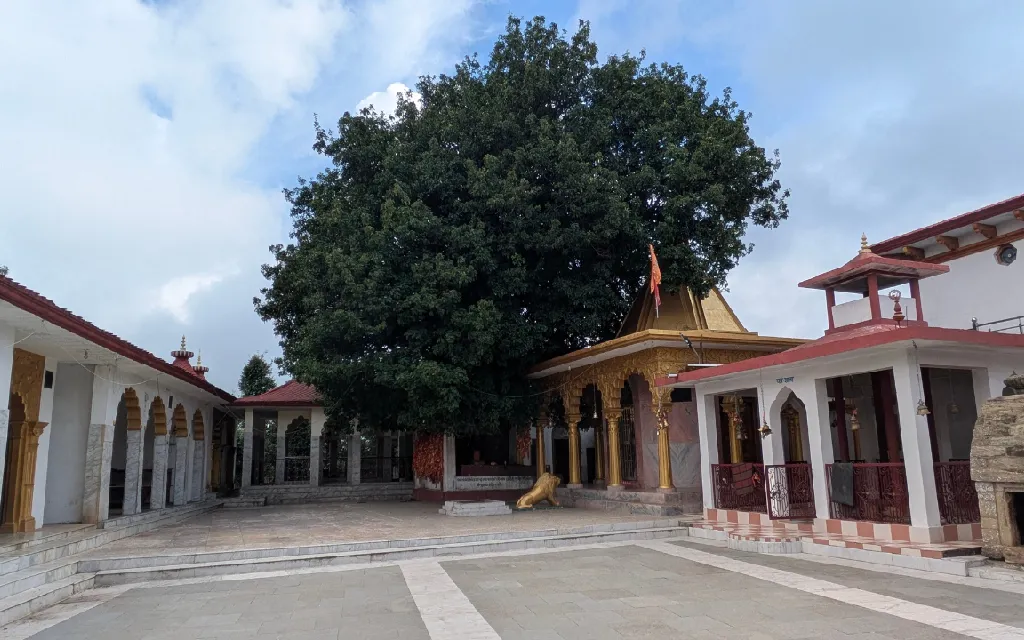
The ancient goddess-abode of Manila, adorned with the temples of countless deities and their captivating idols, radiates a spiritual divinity that has made it a centre of faith for every devotee. In the courtyard, before the temple, stands an ancient, evergreen tree that shares with every visitor the blessing of its cool, restful shade - earning merit for who knows how many years.
Every person, of course, has the chance in life to see all manner of plants and trees, and to learn their names and their uses. Yet here, in the Manila temple complex, what kind of tree has nature raised - one whose name no one has been able to tell, one that no one had ever seen before? This solitary member of the plant family remains a riddle. It is wondrous, otherworldly and utterly unique.
The local residents and elders here say that the tree stands today just as they have seen it since childhood; their own elders too would tell that they had seen it exactly so. Even in old photographs of the temple, the tree appears just as it does now. This shade-giving tree stays green all year round. In May and June small white flowers appear on it, followed by seeds the size of tiny black peppercorns - yet no saplings have ever sprung from them. The tree is not very tall, its branches are dense, and its trunk has grown entirely hollow. And still, in the fierce storm of 1984, when the great pines, deodars and oaks all around were felled, it stood firm and unmoved in its place.
Of its name, everyone says the same thing - that they have seen such a tree for the first time. Even botanical scientists, after research on many occasions, have been unable to name it; its botanical name could never be determined.
On 18 June 2010, Jyotirpitheshwar Jagadguru Shankaracharya Swami Vasudevanand Saraswati Maharaj of the Panch Dashnam Juna Akhara gave this shade-giving tree the name “Kalpavriksha”, declaring it a matchless gift of nature to this region and the grace of Bhagwati Mata. He said that to be in its presence, to circumambulate it and to rest in its cool shade destroys many of a person’s ailments, and fills the body with energy and the mind with bliss.
Delivering a discourse beneath this very tree, he said with conviction that a person suffering from high blood pressure need only sit in its shade for half an hour and see for himself how his blood pressure steadily improves.
Truly, the joy of this tree’s shade is otherworldly - it makes the devout person energetic in body, mind and spirit. It grants boundless bliss, dispels the weariness of an unfulfilled life’s journey, and fills one with zeal and delight. Many devout women tie a chunri to its branches and make their heartfelt wishes.
So come - you too, once, experience the coolness of this Kalpavriksha’s shade and the bliss it brings.
- Kuber Singh Kadakoti
Through the Manila Temple Management Trust, the shrine serves the wider community in many ways.

Financial help for meritorious students from needy families.

Assistance for the weddings of daughters of poor families.

Camps held with experienced doctors from various cities.

An ambitious meditation centre proposed at Devidham Manila.
O Mayya, Manila Mayya - victory, victory to you,
Mother, you are the hope of every living being.
Plan your visit to the temple and experience the peace of the Kumaon hills.
Plan Your Visit